
Before You Plan 2027, Recognize the People Who Made 2026 Possible


The Numbers Never Tell the Entire Story
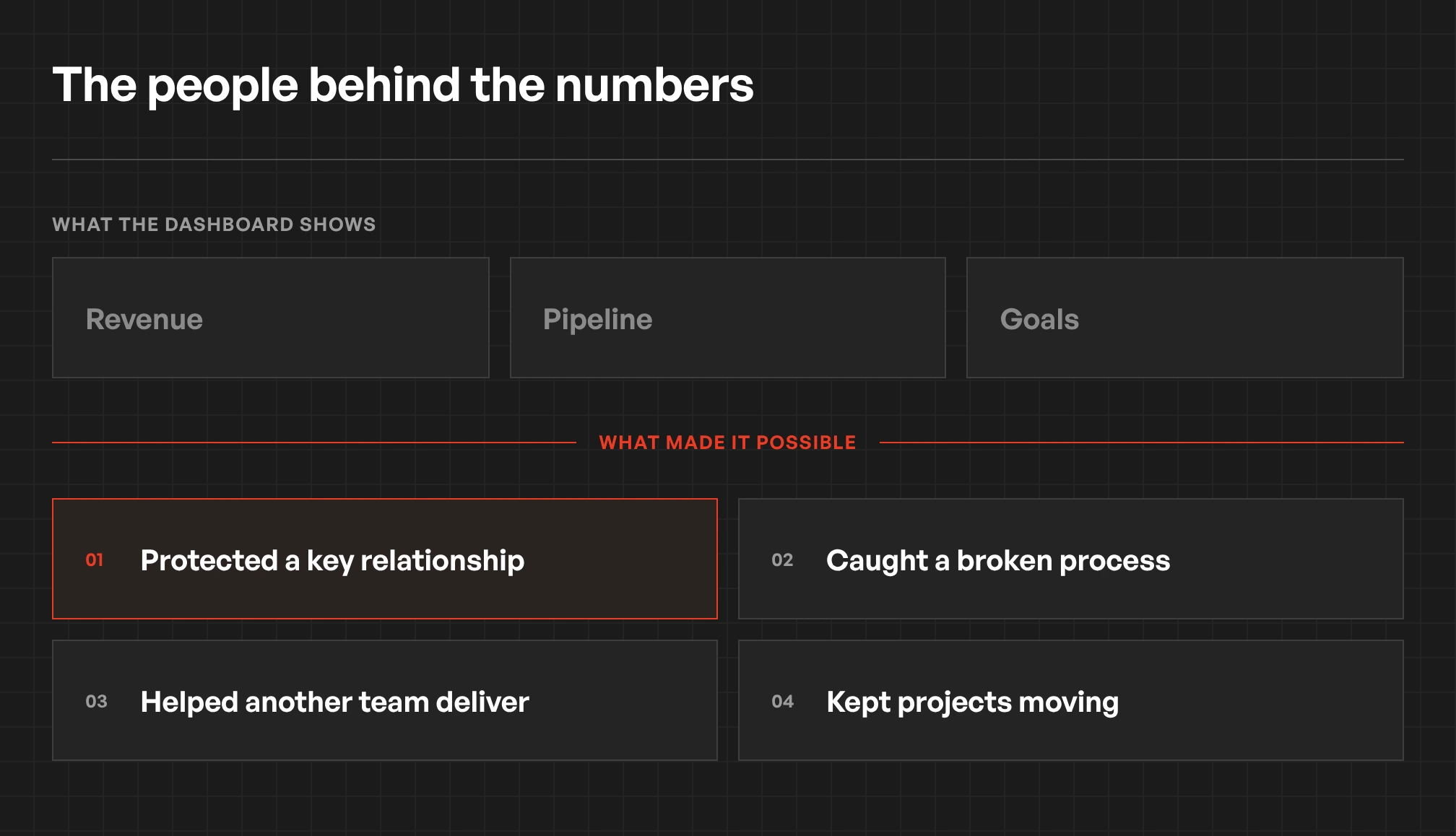
Business results tell us what happened. They rarely explain who kept everything moving.
Who protected an important customer relationship?
Who noticed a broken process before it became a larger problem?
Who helped another team meet a deadline?
Who kept projects moving when priorities changed for the third time before lunch?
These contributions may not appear on a dashboard, but they are often what make the dashboard possible.
Gratitude helps leaders see the work behind the outcomes. It also reveals where collaboration is strong, where responsibilities are unclear and where too much knowledge or accountability may be concentrated in one person.
Recognition Can Reveal Hidden Dependencies
The people you feel most grateful for may also be carrying more than the business realizes.
If the same employee is always rescuing projects, answering every question or maintaining every important relationship, that reliability may be hiding an operational risk.
A sincere thank you matters. But dependable people should not be rewarded with permanent overload.
Leaders can turn recognition into action by asking:
- What does this person know that others need to understand?
- Which decisions continue to return to them?
- What work should be documented, delegated or automated?
- Do they have the authority and resources their responsibilities require?
- How can we build greater capability around them?
This is where gratitude becomes more than a seasonal message. It becomes useful leadership information.
Turn Appreciation Into Shared Ownership
Sustainable growth does not come from asking the same people to keep doing more. It comes from creating the clarity, systems and support that allow more people to contribute effectively.
That may mean clarifying a role, documenting a process or improving how leads move between marketing and sales. It could involve strengthening the CRM, simplifying reporting, automating repetitive work or giving a team member greater authority to make decisions.
Forward Thinkers approaches growth as a connected system. Creating demand matters, but so does what happens after interest is generated. Positioning, content, campaigns, sales processes, technology, ownership and measurement must work together.
The same is true of people. A strong strategy cannot succeed if the team lacks clarity about how to execute it.
Build the 2027 Plan Through Your People
Before leadership finalizes the plan for 2027, invite the team into the conversation.
Ask them:
- What helped us make progress this year?
- Where did work become unnecessarily difficult?
- Which responsibilities remain unclear?
- What should we stop, simplify or improve?
- What support would help us perform better next year?
These conversations create more than engagement. They help leaders identify the real constraints affecting execution.
They also reinforce an important idea: people are not simply resources assigned to a growth plan. They are the people through whom growth becomes possible.
Pause Without Losing Direction
Taking time to reflect does not mean losing momentum.
In fact, a business with clear priorities, capable people and reliable systems should allow its leaders and employees to step away, spend time with family and return without needing to restart everything.
That is a healthier definition of progress.
As you look toward 2027, celebrate the numbers. Appreciate the wins. But take time to recognize the people behind them and make sure next year’s plan gives those people the clarity, trust and support they need to succeed.
If you want to understand where unclear ownership, disconnected systems or execution gaps may be limiting your growth, start with the free Forward Thinkers Growth Assessment.
Ready to turn those insights into a focused plan for 2027?
Schedule a free consultation with Forward Thinkers. We will help identify the constraints affecting your growth and determine what to address first.
Sign up for our newsletter
Related posts