
Don’t Coast Into the New Year: How Leaders Can Build Momentum Before 2027


The holiday season has a way of changing the rhythm of a business.
Calendars fill with travel, celebrations and end of year obligations. Projects slow down. Decisions get pushed into January. Teams begin operating in maintenance mode, and “let’s revisit that next year” becomes the unofficial company slogan.
Some slowdown is natural. People need time to recharge and enjoy the season. But there is a difference between creating space for rest and allowing the business to drift.
The final weeks of the year can be one of the most valuable periods for building momentum, particularly when leaders use them to increase clarity and collaboration rather than simply demanding more output.
Do Not Confuse Activity With Momentum
Entering 2027 with momentum does not mean squeezing every possible task into December.
Nobody wants an urgent strategy session scheduled between the office cookie exchange and a flight home for the holidays.
Real momentum comes from knowing:
- What the business is trying to accomplish
- Which priorities matter most
- What could prevent progress
- Who owns each initiative
- How success will be measured
When those answers are unclear, teams may stay busy without moving the business forward. Leaders often compensate by becoming more involved in daily decisions, which creates an organization increasingly dependent on them.
A stronger approach is to use the year end period to create shared understanding and ownership.
Bring Your Team Into the Strategy
Planning is more effective when it happens with the people responsible for execution.
Invite your team to reflect on questions such as:
- What worked especially well this year?
- Where did we lose time or momentum?
- Which processes created unnecessary friction?
- What should we stop, start or improve?
- What would make us more effective in 2027?
- Where do responsibilities or decision rights remain unclear?
These conversations can surface insights that leadership dashboards often miss. They also help people understand not only what the priorities are, but why they matter.
When employees contribute to the plan, they are more likely to take ownership of it. That is how businesses begin growing through their people, instead of building strategies around them.
Create a Focused First Quarter
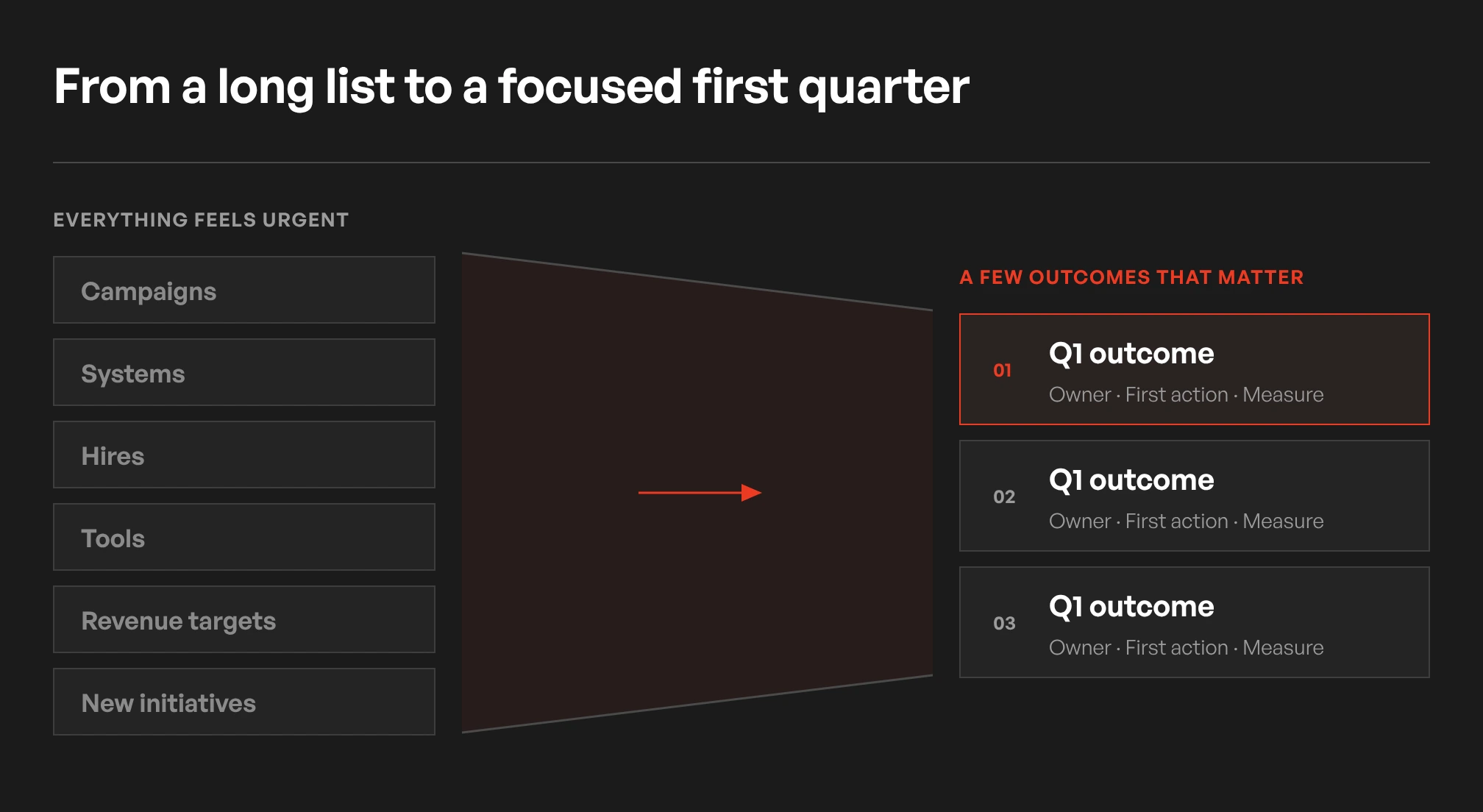
A new year can make every initiative feel urgent.
It is tempting to enter January with a lengthy list of campaigns, systems, hires, tools and revenue targets. By February, that ambitious plan may have transformed into a very attractive spreadsheet that nobody opens.
Choose a small number of outcomes that will create the greatest impact during the first quarter. For each one, clarify:
- The outcome the business needs
- The person responsible for leading it
- The resources or support required
- The first action that must happen
- The measure that will show progress
This turns broad ambition into coordinated execution.
Build a Business That Does Not Wait for You
Year end planning should also reveal where the business remains too dependent on its owner or senior leaders.
Look for decisions that repeatedly return to the same person, processes that exist only in someone’s head and projects that stall when one leader becomes unavailable.
The objective is not for leaders to become less important. It is for their time and experience to be applied where they create the most value.
Clear responsibilities, reliable systems and confident teams allow a business to keep moving without requiring its owner to personally push every initiative forward.
That kind of growth takes creativity, clarity and intention. It also requires leaders to trust their people and appreciate the perspective they bring to the table.
Start 2027 Before January Arrives
You do not need to complete the entire 2027 plan before the holidays. You simply need enough clarity for everyone to understand where the business is going and what comes next.
Celebrate the progress your team made this year. Give people room to recharge. Then create a shared starting point that makes January feel like the continuation of a plan, rather than the beginning of another planning cycle.
If you would like an outside perspective on the constraints affecting your growth, complete the free Forward Thinkers Growth Assessment. It can help identify where your strategy, systems or execution may be limiting momentum.
Ready to turn those insights into an actionable plan? Schedule a conversation with Forward Thinkers and let’s discuss how to help your business enter 2027 with greater clarity, collaboration and momentum.
Sign up for our newsletter
Related posts