
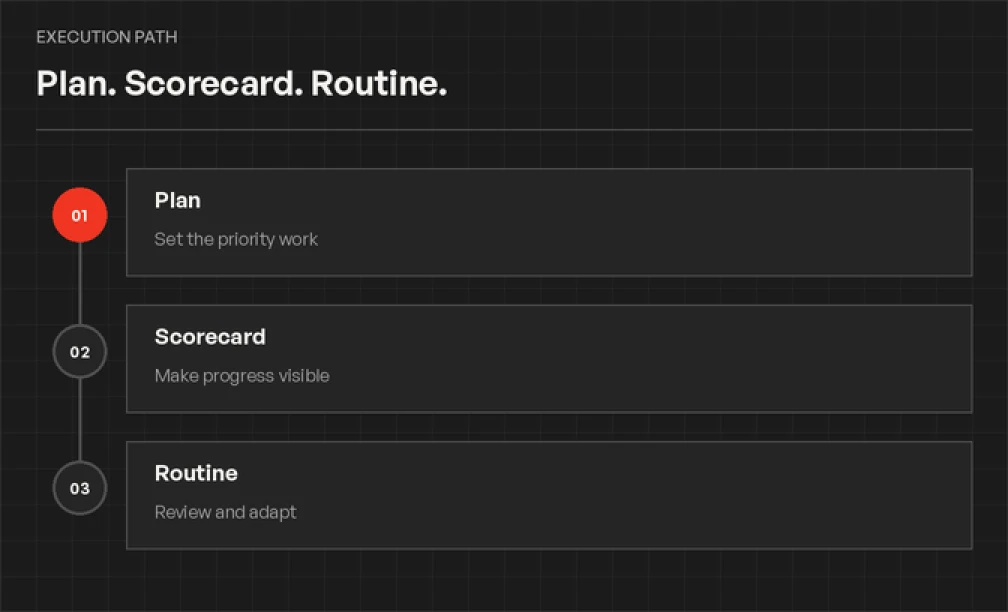
Implementation of a Plan, Scorecard, and Routine


Introduction
As we step into a new year, businesses face the opportunity—and challenge—of implementing strategies that can drive growth and success. While a well-crafted plan is essential, it’s the execution that determines its impact. At Forward Thinkers, we’ve identified key best practices to ensure plans are structured, aligned, and communicated effectively across all levels of the organization.
1. Structure the Work: Establish Individual Performance Objectives (IPOs)
Not all team members naturally align with the big picture, and the grind of day-to-day work can distract from critical priorities. A proven best practice is defining Individual Performance Objectives (IPOs) that are measurable, achievable, specific to roles, and aligned with timelines.
Why IPOs Matter:
- Clarity: IPOs define the “must-do” tasks that take precedence, ensuring that the right work is done first.
- Alignment: IPOs create a direct connection between individual contributions and organizational goals, ensuring consistent focus across all levels.
- Accountability: Measurable metrics provide transparency and a clear framework for evaluation.
How to Implement IPOs:
- Develop 3–5 objectives for each role, ranked by priority and focused on mission-critical tasks.
- Ensure metrics are specific, measurable, and tied to outcomes such as revenue targets, service levels, or operational efficiency.
- Regularly review IPOs during one-on-one meetings to monitor progress and recalibrate as needed.
By ensuring IPOs are prioritized, organizations align individual efforts with strategic goals, creating clarity and accountability at every level.
2. Establish Consistent Routines
Routines provide the cadence needed to maintain alignment and drive consistent execution. Weekly, monthly, and quarterly reviews create the structure to keep teams focused, while field engagement and disciplined communication practices maximize efficiency.
Field Engagement:
Leaders should dedicate mid-week time to field visits, operational coaching, and team support. This direct engagement ensures alignment between leadership’s vision and frontline execution while fostering trust and accountability.
Communication Discipline:
Unfocused communication can derail productivity and distract teams from meaningful work. To maintain focus:
- Limit informative or directional emails to administrative days, such as Monday and Friday.
- Reserve mid-week communication for action-oriented activities, such as customer engagement and team coaching.
- Establish a CC: and BCC: rule:some text
- Use the TO: line only for individuals required to take action or respond.
- Encourage those on CC: or BCC: lines to set email rules to filter these messages into a “Review” or “Inform” folder.
- Schedule specific times for reviewing these folders to stay informed without interrupting workflow.
This approach minimizes distractions and enables teams to remain focused on customer-facing and operational activities that directly drive results.
3. Use a Scorecard to Measure Success
A scorecard is an invaluable tool to track progress and maintain accountability. It provides clear metrics that align individual and team performance with organizational goals, ensuring measurable outcomes are achieved.
Examples of KPIs:
- Revenue growth
- Gross profit margins
- Customer satisfaction scores
- Employee engagement and retention
- Safety and compliance metrics
Integrating these metrics into regular reviews ensures alignment across all levels and allows performance gaps to be addressed promptly.
4. Communicate with “One Voice”
Effective communication is essential for alignment and execution. The “One Voice” rule ensures that all teams hear consistent messaging, eliminating false narratives and maintaining clarity.
Best Practices for Unified Communication:
- Host all-hands meetings to share key updates and ensure all teams are aligned.
- Deliver consistent messaging across channels to reinforce strategic priorities.
- Address questions and feedback openly to build trust and transparency.
This unified approach fosters alignment and empowers teams to focus on organizational objectives.
Final Thoughts
Execution transforms ideas into results. By implementing Individual Performance Objectives, establishing disciplined routines, leveraging scorecards, and maintaining clear and unified communication, organizations can ensure their strategic plans lead to sustained success.
These best practices create a foundation of clarity, focus, and accountability—empowering teams to deliver results and drive long-term growth.
Discover more strategies for effective change management here:
👉 The Impact of Effective Change Management on Business and Culture
Let’s make this year one of alignment, execution, and growth.
Sign up for our newsletter
Related posts