
Alignment Is Not Consensus: How Leaders Create Clarity Under Pressure
Alignment is not agreement. It is clarity of direction. Leaders who confuse the two slow execution and dilute accountability.


Many leaders believe alignment means everyone agrees.
It doesn’t.
Alignment means everyone understands the direction, their role, and what success looks like, even when opinions differ.
Why Consensus Slows Execution
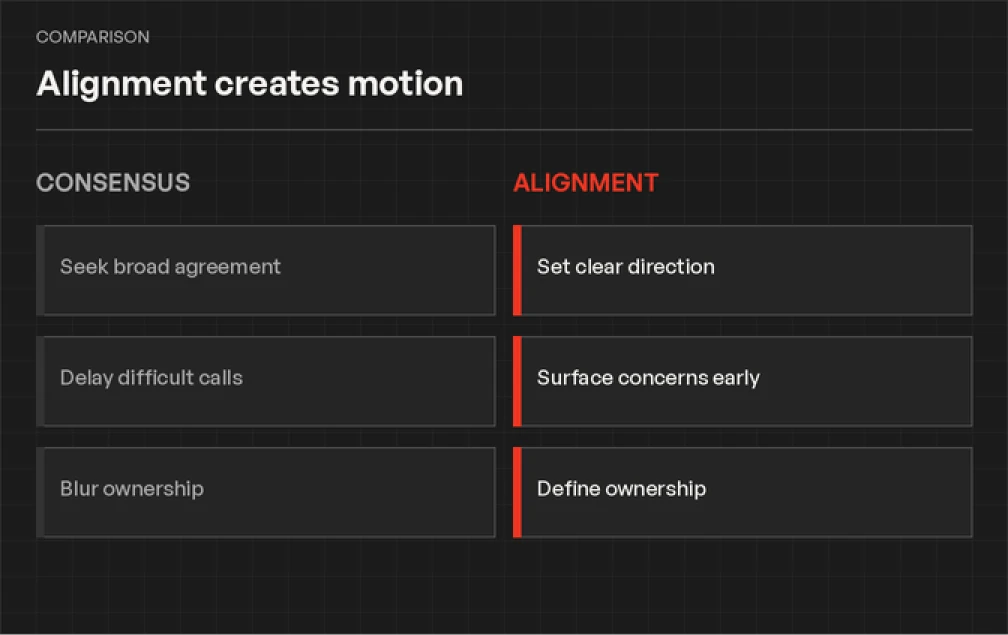
Consensus seeks comfort. Alignment seeks clarity.
When leaders chase agreement:
- Decisions slow
- Messages dilute
- Accountability blurs
Execution suffers.
Vetting Misalignment Before the Play Is Run
Great leaders do the work before execution:
- Clarify the why, what, and how
- Surface concerns early
- Test understanding
- Secure operational alignment
Then they break the huddle and run the play.
Alignment in Practice
From experience, alignment shows up as:
- One voice from leadership
- Clear priorities
- Defined ownership
- Consistent communication
People move faster when clarity exists, even in uncertainty.
Alignment is not about pleasing everyone. It’s about guiding everyone.
Forward Thinkers works with leadership teams to create alignment that accelerates execution, not delays it.
Sign up for our newsletter
Related posts


A management cadence turns demanded outcomes into initiatives, owners, measures, decisions, and learning so leaders manage results, not reactive task lists.


An integrated sales system connects CRM stages, SLAs, SOPs, automation, and ownership so lead movement is visible, repeatable, and continuously improved.

Pick a first AI workflow that is valuable, ready, measurable, and safe to learn from by weighing impact, readiness, work at risk, and governance.