
Modern Leadership Models: Redesign the Work, Don’t Blame the Workforce


When leaders say today’s workforce is disengaged, what they’re often reacting to is not a people problem. It’s a design problem.
Most organizations are still operating with leadership models built for a slower, simpler environment. Fewer systems. Less complexity. More tolerance for ambiguity. Today, that reality no longer exists.
Modern leadership requires something different. Not louder direction. Not more urgency. But intentional design of how work actually gets done.
The Outdated Leadership Model Still in Use
Many organizations unknowingly rely on assumptions that no longer hold up:
- People will figure it out as they go
- Urgency creates performance
- Development happens organically
- Meetings equal alignment
- Accountability means pressure
These models worked when business moved slower. In today’s environment of speed, cross-functional dependency, and constant change, they create friction, burnout, and disengagement.
The Modern Leadership Shift: Design Over Pressure
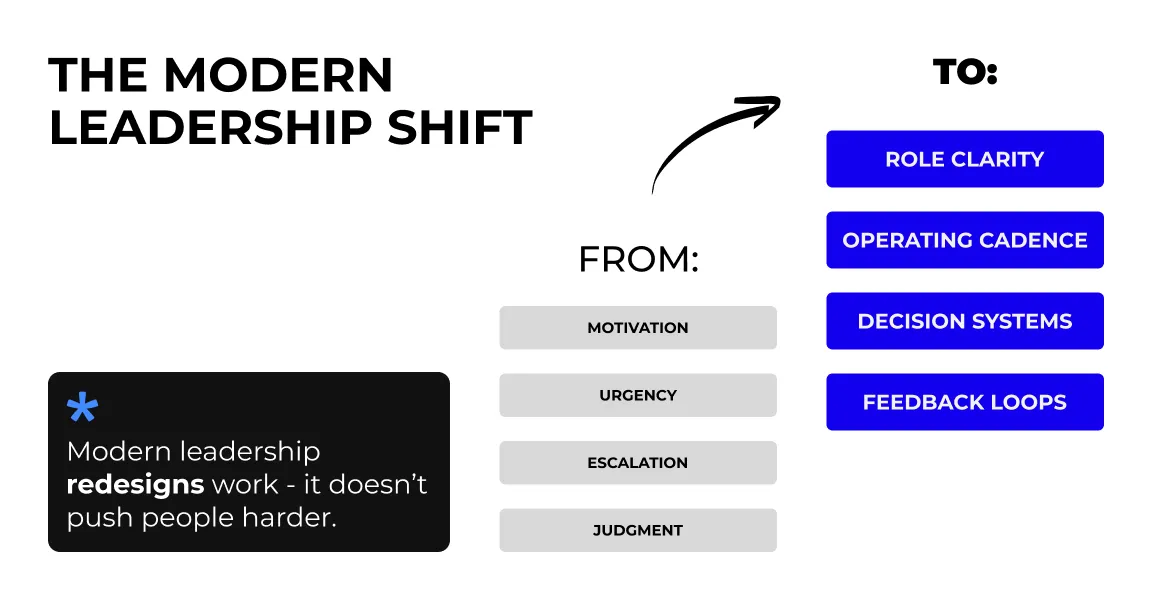
High-performing leaders are not asking people to work harder. They are redesigning work so performance is possible.
Modern leadership models focus on:
- Clear role definition instead of assumed understanding
- Structured onboarding and development instead of trial by fire
- Defined priorities instead of competing demands
- Systems and routines instead of constant judgment calls
- Coaching and feedback instead of escalation
This is not softer leadership. It is more disciplined leadership.
Redesigning the Work in Practice
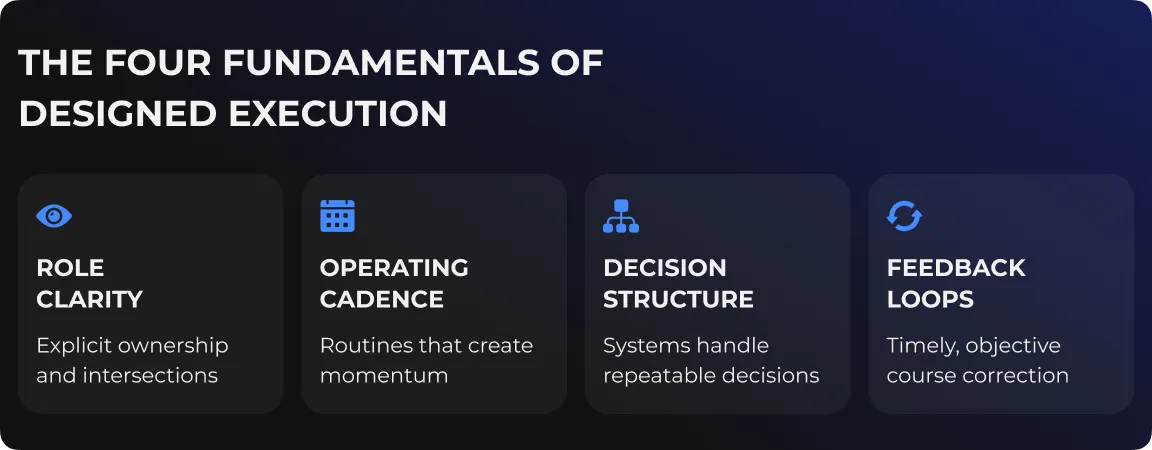
From my experience leading and advising organizations, execution improves dramatically when leaders focus on four fundamentals:
1. Role clarity
People perform better when responsibilities are explicit and intersections are understood.
2. Operating cadence
Routines create consistency. Consistency builds trust and momentum.
3. Decision structure
Not every decision should escalate. Systems should handle what is repeatable.
4. Feedback loops
Performance improves when feedback is timely, objective, and actionable.
Why This Model Works
When work is designed intentionally:
- Meetings become purposeful
- Accountability becomes fair
- Leaders regain time and focus
- Teams gain confidence
- Performance becomes sustainable
Modern leadership is not about controlling people. It’s about building systems that allow people to succeed.
If your organization feels busy but not effective, the issue is rarely effort. It’s structure.
Forward Thinkers helps leadership teams redesign how work gets done so execution becomes clear, aligned, and sustainable.