
Manage Energy, Not Time: Success for Introverts


The Productivity Trap: Why Time Management Isn’t Enough
High-performance cultures glorify time management: fill every hour, stack meetings, stay “always on.” But for introverts, success doesn’t come from busier schedules—it comes from managing energy.
Social interactions and overstimulation drain introverted professionals quickly, leading to burnout and reduced performance. The real key to sustainable success? Managing your energy, not just your time.
Recognizing the Signs of Energy Drain
If you experience any of these, you're not broken—you’re an introvert ignoring your internal fuel gauge:
- Exhaustion after back-to-back meetings
- Needing days to recover from networking events
- Struggling to stay engaged in group settings
- Losing creativity when your calendar is packed
These aren’t flaws. They're signals to recalibrate your workflow.
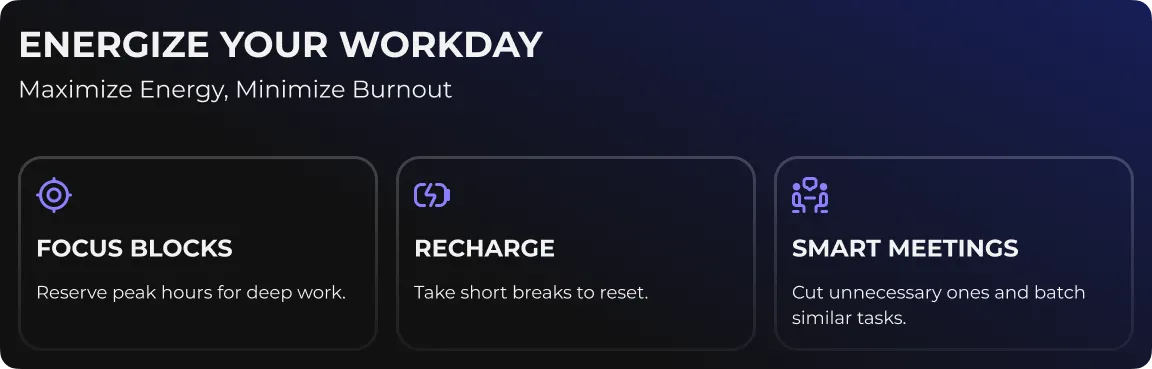
Building an Energy-Conscious Workday
1. Structure Focus Blocks
Schedule deep work during peak energy hours—and guard that time like a revenue-generating meeting.
2. Add Buffer and Recharge Time
Insert short recovery breaks between cognitively or socially heavy tasks. Micro-rest = macro-results.
3. Limit Meeting Overload
Ask: Does this need a meeting? If not, use async communication. Batch meetings to reduce energy drag from switching contexts.
Navigating Socially Demanding Roles
Introverts excel in leadership and sales when they:
- Prepare to reduce unpredictability
- Set boundaries around availability
- Favor one-on-one or small-group interactions
Thriving doesn’t require avoiding people—it requires engaging with intention.

Introvert-Friendly Self-Care That Actually Works
Not pampering—preservation:
- Solo reflection
- Movement and walking meetings
- Digital detox breaks
- Clear work/personal transitions
These rituals recharge your internal battery.
Final Thoughts
Introverts don’t run out of time—they run out of energy. When you align your work with your energy rhythm, you unlock productivity, presence, and performance that lasts.
Success isn’t about doing more—it’s about doing what matters when you’re at your best.
Ready to align your work rhythm with your natural energy flow?