
First Party Data Is the New Brand Intelligence Layer


For years many companies treated customer data as an operational byproduct. It lived in CRM records, web analytics, email platforms, support systems, and spreadsheets, mostly used for reporting after the fact. That model is outdated. In a market shaped by privacy pressure, fragmented discovery, and AI assisted decision making, first party data has become one of the most strategic assets a brand can own. It is no longer just information about transactions. It is the intelligence layer that helps the company understand audience behavior, improve relevance, and make better growth decisions.
Why first party data now matters more
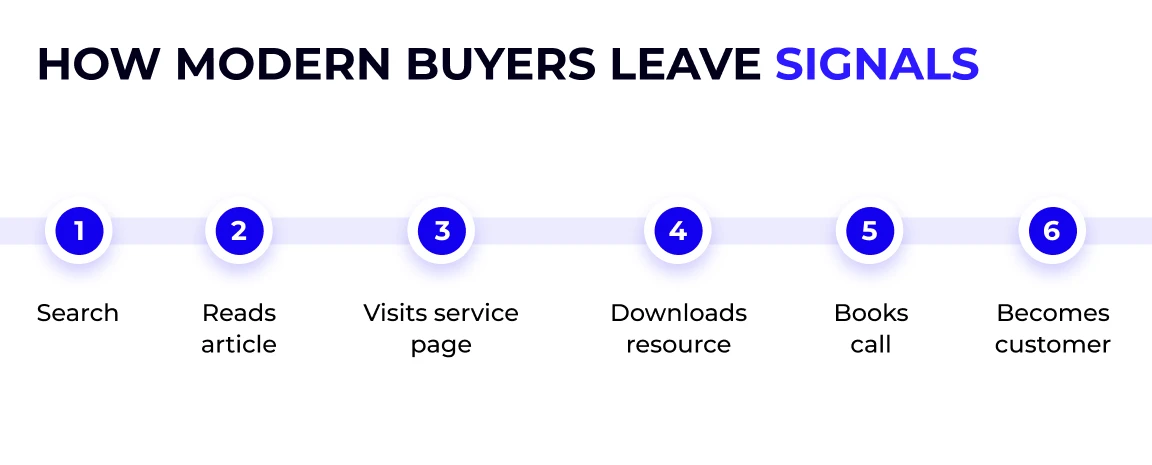
First party data matters because it reflects direct relationships. It captures what people actually do with your brand, not what a third party infers from broad behavior elsewhere. That includes site paths, content engagement, form behavior, lead source quality, purchase history, service interactions, retention patterns, and qualitative feedback. When these signals are unified and interpreted well, they reveal where attention converts into trust, where friction interrupts progress, and what language correlates with action. That is brand intelligence in usable form.
The strategic significance has grown as privacy expectations have tightened. The FTC continues to emphasize transparency, responsible data practices, and security as foundations of consumer confidence. Industry groups like the IAB have also framed first party data as central to future addressability, segmentation, and measurement. The message for business leaders is clear. The move toward first party data is not only a media issue. It is a trust issue and a competitive issue. The firms that own better relationship data can make faster, smarter, and more compliant decisions than firms relying on decaying external signals.
What counts as usable brand intelligence
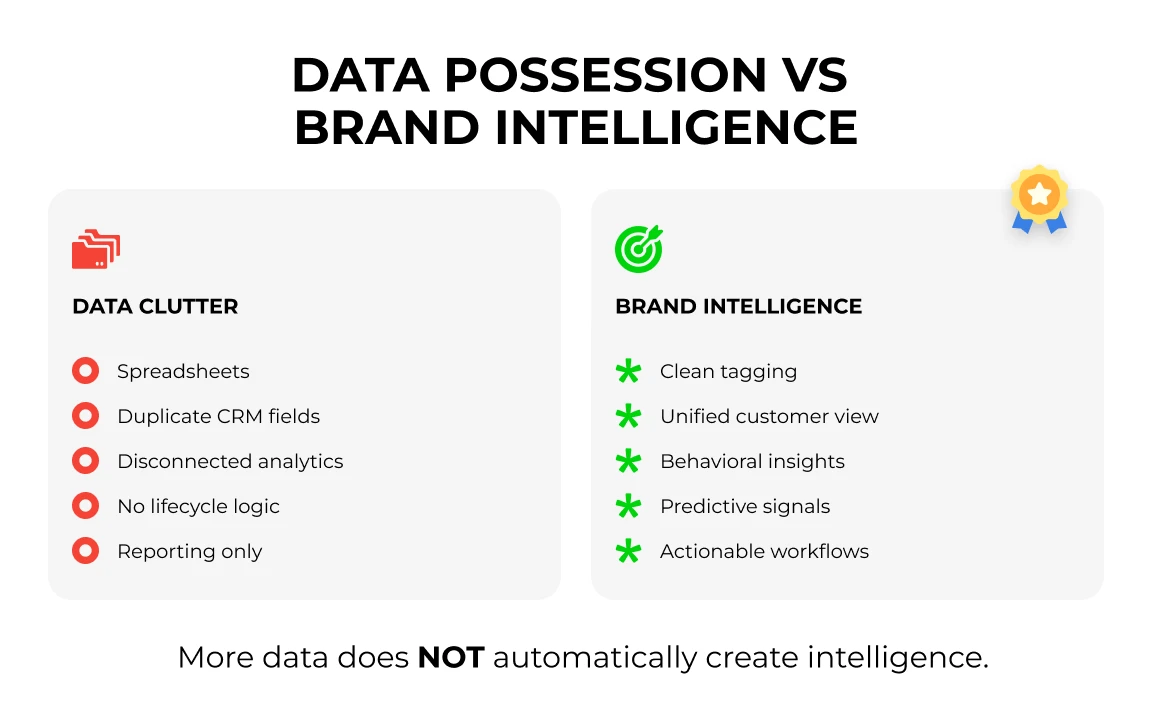
Yet many organizations still confuse data possession with intelligence. Having more fields in a CRM does not mean you have a useful intelligence layer. Usable brand intelligence requires identity discipline, clean tagging, lifecycle logic, governance, and business questions worth answering. For example, which content patterns correlate with qualified pipeline? Which service pages assist conversion most often? Which audiences retain at higher rates? Which objections repeat by segment? Which customer behaviors signal expansion readiness? Those questions turn raw data into strategic advantage.
Where AI and machine learning improve signal quality
AI automation and machine learning materially improve this work when the basics are in place. Machine learning can help segment audiences by behavior, predict churn risk, identify content affinity, and detect patterns that manual reporting often misses. AI can summarize call notes, classify support themes, and help teams connect qualitative signals with quantitative behavior. Databricks notes that enterprises are moving from isolated chatbots toward more agentic systems that automate practical workflow tasks. In a marketing and growth context, that means the most valuable use cases often sit in data interpretation and operating efficiency, not just content generation.
First party data also improves brand strategy itself. It tells you what parts of the narrative resonate, what questions persist despite your content, and where the journey breaks by audience. That allows the brand to stop speaking from internal assumptions and start speaking from observed behavior. It also sharpens investment. Paid media can be informed by actual lifecycle insight. Content can be prioritized based on assisted conversion and recurring objections. Sales and service can align around the same customer signals instead of arguing from anecdotes.
How privacy and trust shape the data strategy
The risk, of course, is misuse. Data ambition without governance damages trust quickly. Deloitte has reported that consumers reward innovation paired with strong data responsibility and punish innovation that appears careless. That is why the strongest first party data strategies are explicit about consent, relevance, access, retention, and practical value to the customer. Good data strategy should feel like a service improvement, not a surveillance program.
What leaders should operationalize
If your company wants a stronger brand, better targeting, and smarter growth decisions, do not start with another dashboard. Start by defining the handful of customer signals that matter most to preference, conversion, and retention. Clean the infrastructure around them. Then build the workflows that turn those signals into action. That is how first party data becomes brand intelligence instead of digital clutter.
Practical Expansion
A mature first party data strategy also reshapes leadership conversations. Instead of debating channel opinions, teams can evaluate relationship signals. Which audiences consume authority content but never convert? Which customers engage deeply before renewal? Which sources produce the highest trust and retention, not just the fastest lead forms? These questions allow brand, sales, and service teams to work from the same evidence base. That is especially important in firms where growth has outpaced data discipline. Without a shared intelligence layer, each department tells a different story about the customer and the brand pays the price in inconsistency.
It is also worth distinguishing between personalization and relevance. Many companies pursue data strategy mainly to personalize surface level experiences, yet the bigger advantage often comes from being more relevant in the moments that matter. Relevance means showing the right proof to the right segment, routing the right question to the right team, and identifying the next best action based on real behavior. Those improvements may be less flashy than hyper personalized messaging, but they are often more valuable because they reduce friction at the exact points where revenue decisions are being made.
Leaders should therefore create a first party data roadmap tied to business questions, not just system upgrades. Decide which signals matter most to preference, conversion, retention, and expansion. Assign owners for data quality and action rules. Build only the dashboards and automations that help teams decide better or respond faster. That keeps the data layer commercially relevant. It also prevents the common trap where data projects grow in complexity while shrinking in practical usefulness.
There is a brand equity advantage here as well. When first party insight is connected to content, service, and lifecycle design, the customer experiences the brand as more relevant and more coherent. Communications feel timely instead of random. Offers feel contextual instead of forced. Service feels aware instead of disconnected. Those improvements strengthen the perception that the company is paying attention. In many categories that attentiveness becomes part of the brand promise itself, which is why the intelligence layer belongs in strategy conversations and not only in analytics meetings.
The discipline also improves forecasting because behavior based intelligence often reveals changes earlier than revenue reports do. If a high value segment starts engaging less, if support themes shift, or if content consumption drops before inquiry volume changes, the company gains time to respond. That early warning capability is one of the least discussed advantages of first party data. It helps leadership manage brand and revenue risk before the problem becomes visible in lagging commercial results.
Execution Checklist
- Define five core customer signals tied to growth, retention, and trust.
- Fix naming, tagging, and lifecycle consistency across CRM and web systems.
- Prioritize actions the business can take when a signal appears.
- Set privacy and access rules before expanding automation.
- Review whether data insight is changing decisions, not just filling dashboards.
Leader Questions to Pressure Test the Strategy
- Which customer signals are we collecting that actually change decisions?
- Where are we storing data no one uses?
- Are privacy, access, and retention rules clear enough to support more automation safely?
The companies that answer these questions well tend to build leaner, more effective data systems because they are solving for commercial usefulness rather than data accumulation.
FAQ Section
What is first party data in a brand strategy context?
It is the data a company collects directly from its audience and customers through owned interactions such as website visits, forms, CRM, purchases, and service engagement.
Why is first party data more valuable now?
It is more reliable, privacy responsible, and commercially useful than weak third party signals because it reflects direct relationships and actual behavior.
Can machine learning improve first party data strategy?
Yes. Machine learning can detect patterns, segment audiences, predict risk, and help connect behavioral signals to commercial outcomes.
What This Unlocks Next
The next growth constraint is rarely isolated. Once this issue is addressed, the next question is how to strengthen the next layer of the brand, authority, revenue, and execution system.
Read the next article in the Forward Thinkers series: AI Automation for Content Operations, How to Scale Output Without Diluting Expertise