
Building High-Performance Teams as an Introverted Leader


Introverted Leadership & Team Dynamics
The traditional image of leadership often centers on bold, outspoken personalities.
But many of the most effective leaders are introverts—quiet, thoughtful, and deeply connected to their teams.
Introverted leaders excel at:
- Building trust through authenticity.
- Creating environments of psychological safety.
- Fostering collaboration through thoughtful engagement.
Their leadership style isn’t driven by charisma; it’s built on substance and connection.
Fostering Psychological Safety
Psychological safety is essential for high-performing teams. It’s the shared belief that team members can:
- Speak up with ideas.
- Admit mistakes.
- Challenge norms—without fear of embarrassment or retaliation.
Introverted leaders naturally foster this environment by:
- Listening more than they speak.
- Encouraging diverse perspectives.
- Creating space for quieter team members to contribute.
This cultivates trust and innovation, which are critical for team success.
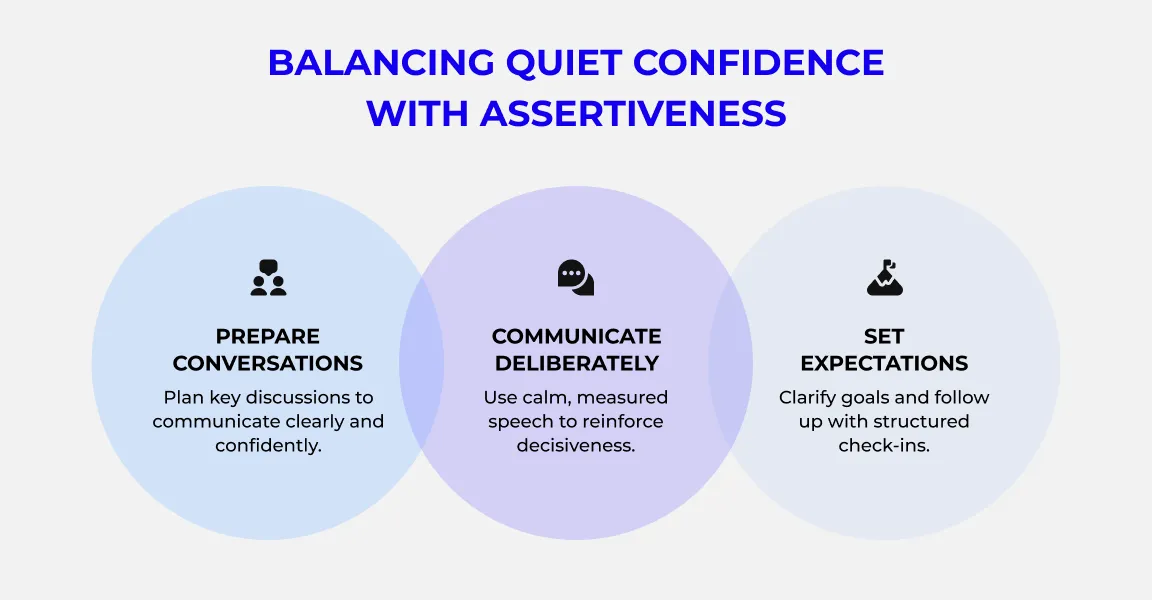
Balancing Quiet Confidence with Assertiveness
Introverted leaders may shy away from “command and control” leadership styles—but that doesn’t mean they lack authority.
Key techniques to project confident leadership:
- Prepare for key conversations to ensure clarity and confidence.
- Use calm, deliberate communication that reinforces decisiveness.
- Set clear expectations and hold the team accountable through structured check-ins.
Quiet leadership can be just as powerful—and often more respected—than loud directives.
Managing Diverse Personality Types
Leading a team means managing different personality types, including extroverts who thrive on constant interaction.
For introverted leaders:
- Leverage complementary strengths: Let extroverted team members lead brainstorming sessions or public presentations while you focus on strategy and execution.
- Balance engagement styles: Mix group interactions with one-on-one meetings to connect in ways that suit both you and your team members.
Effective leadership isn’t about conforming to one style—it’s about orchestrating a team where everyone plays to their strengths.
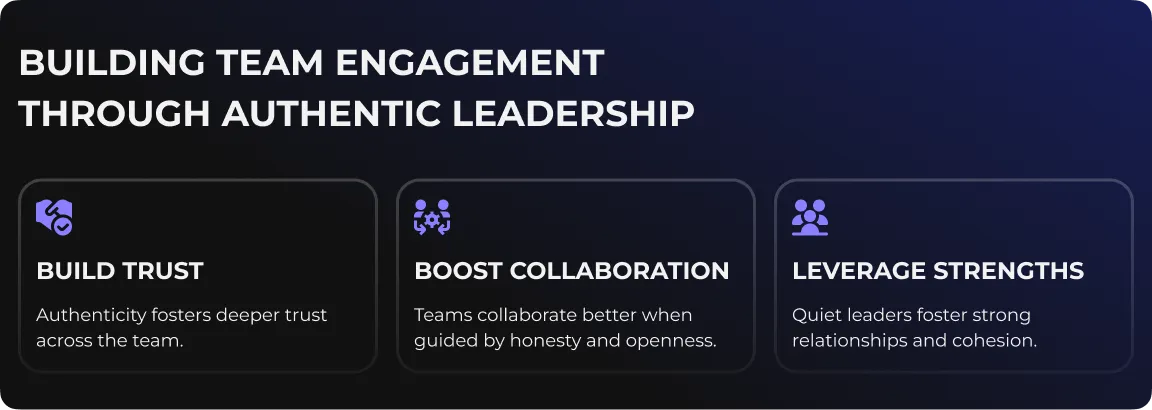
Building Team Engagement through Authentic Leadership
When leaders show up authentically:
- Team members feel empowered to do the same.
- Trust deepens.
- Collaboration improves.
Introverted leaders excel at cultivating meaningful relationships, which translates to stronger team cohesion and performance.
Final Thoughts
You don’t need to be the loudest voice to be an effective leader.
Introverted leadership—rooted in listening, empathy, and thoughtful action—builds high-performance teams that trust, innovate, and deliver results.
Leading authentically is not only sustainable—it’s your greatest leadership advantage.
Ready to build a high-performing team that aligns with your leadership style?
Let’s design a team leadership strategy that plays to your natural strengths.